Interview with
Ariella Diamond
Director of Operations and Strategic Initiatives, Avenues New York
Curated Flexibility: A Vision for Schools That Grow With the World Around Them
Student Commons at Avenues New York
CJ: Can you share a concrete example of how you’ve put this into practice at the Avenues New York Campus?
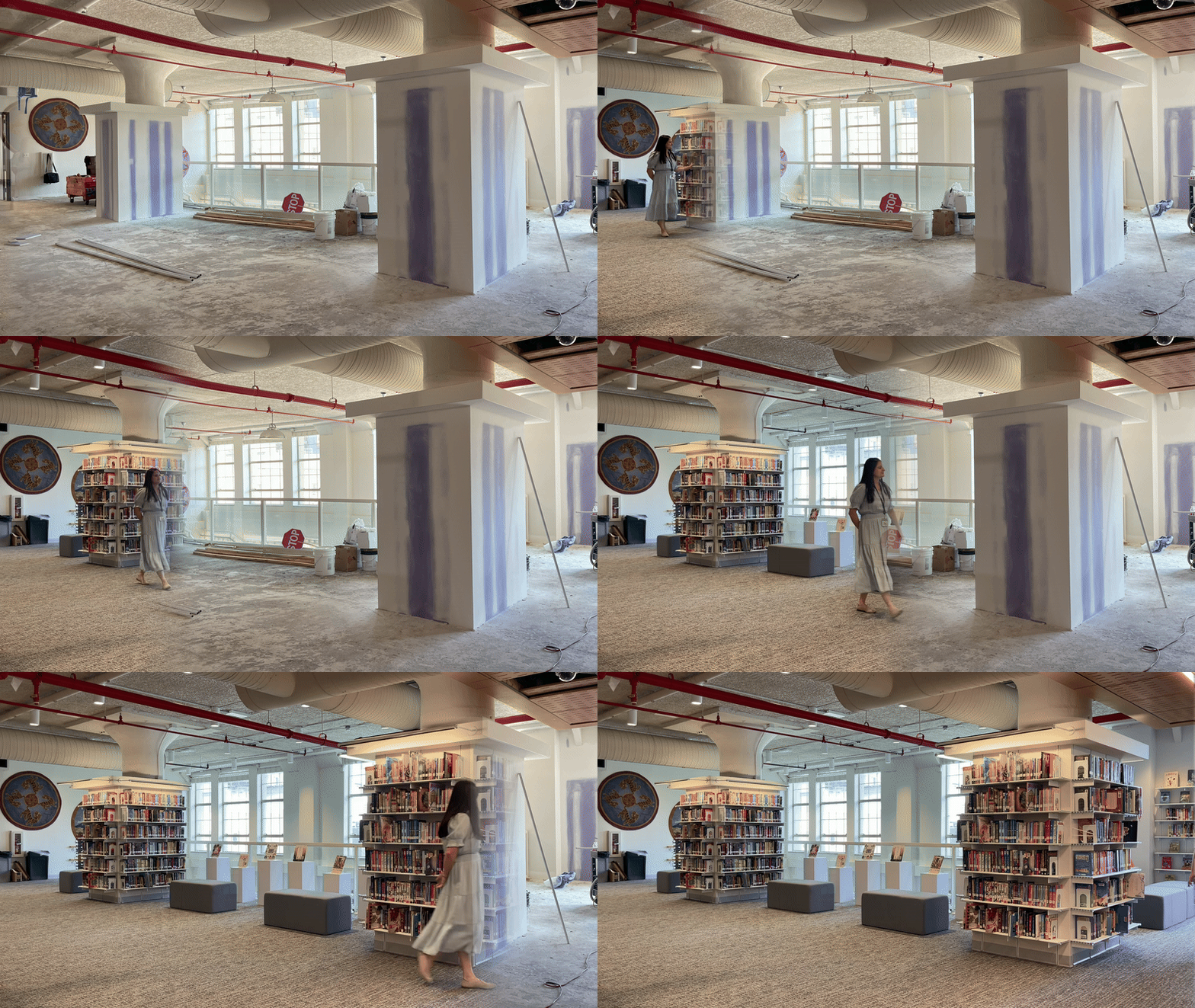
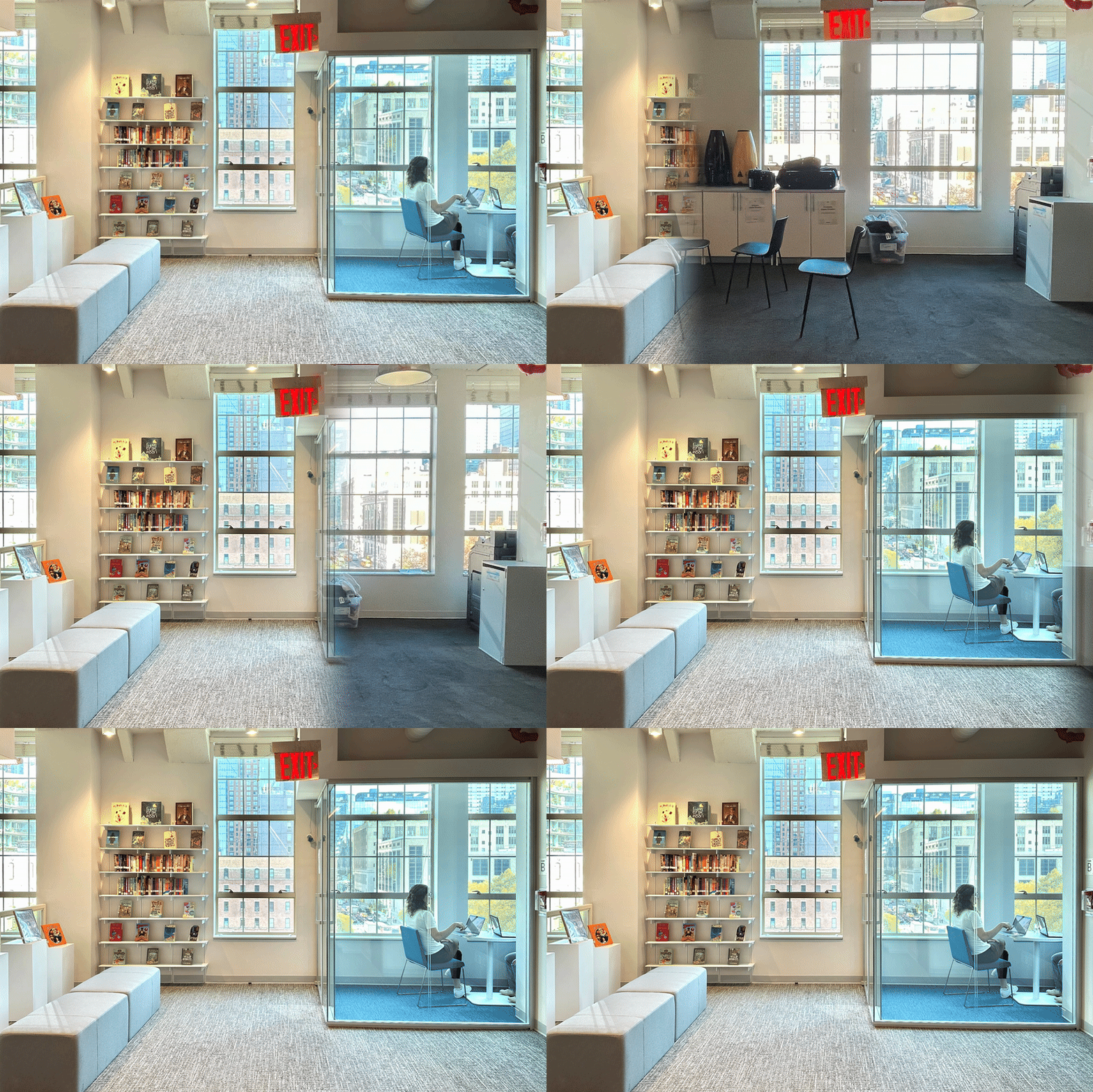
AD: We recently redid the 6th floor, which includes the hallways and large commons area. The student commons is an important part of our facilities at Avenues New York, we have multiple spaces that can be used dynamically as large gathering spaces, small group work spaces, etc. We wanted to be super intentional with the redesign of that space, so we added a nook, which is a small meeting space for colleagues, and expanded the library.
CJ: Can you talk more about ‘school within Library’ concept?
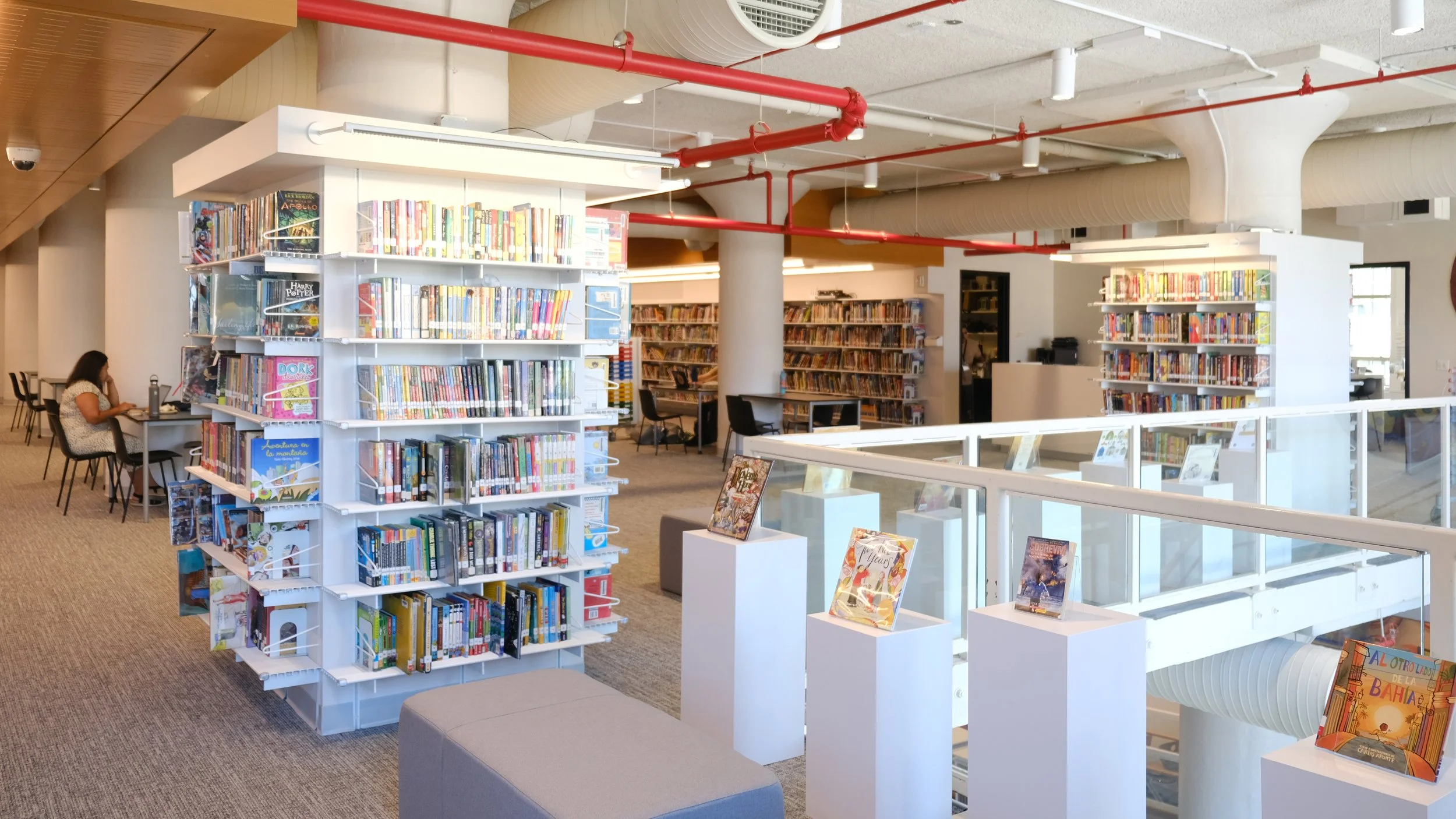
AD: Our vision is to have a school within a library, so our library shelves are out in common areas. When we redid the 6th floor commons, we wanted to create more of a feel of being immersed in a library, so we added wrap around library shelvings on the columns and more soft seating and display areas. This curated flexibility helps avoid the tragedy of the commons, where common spaces without a specific purpose end up being grounds for storage and trash.
“curated flexibility helps avoid the tragedy of the commons”
“School within a Library”
Student Commons at Avenues New York
CJ: How do you measure if curated flexibility is successful?
AD: We look at measuring success in a few ways. For areas like the nook we can track how often and what it’s being used for to make sure the space is meeting the goals. We also circle back with all the stakeholders after a few months of usage to get anecdotal feedback on the space, and we try to incorporate that feedback into future projects. We learn something new every year.
“Tragedy of Commons”
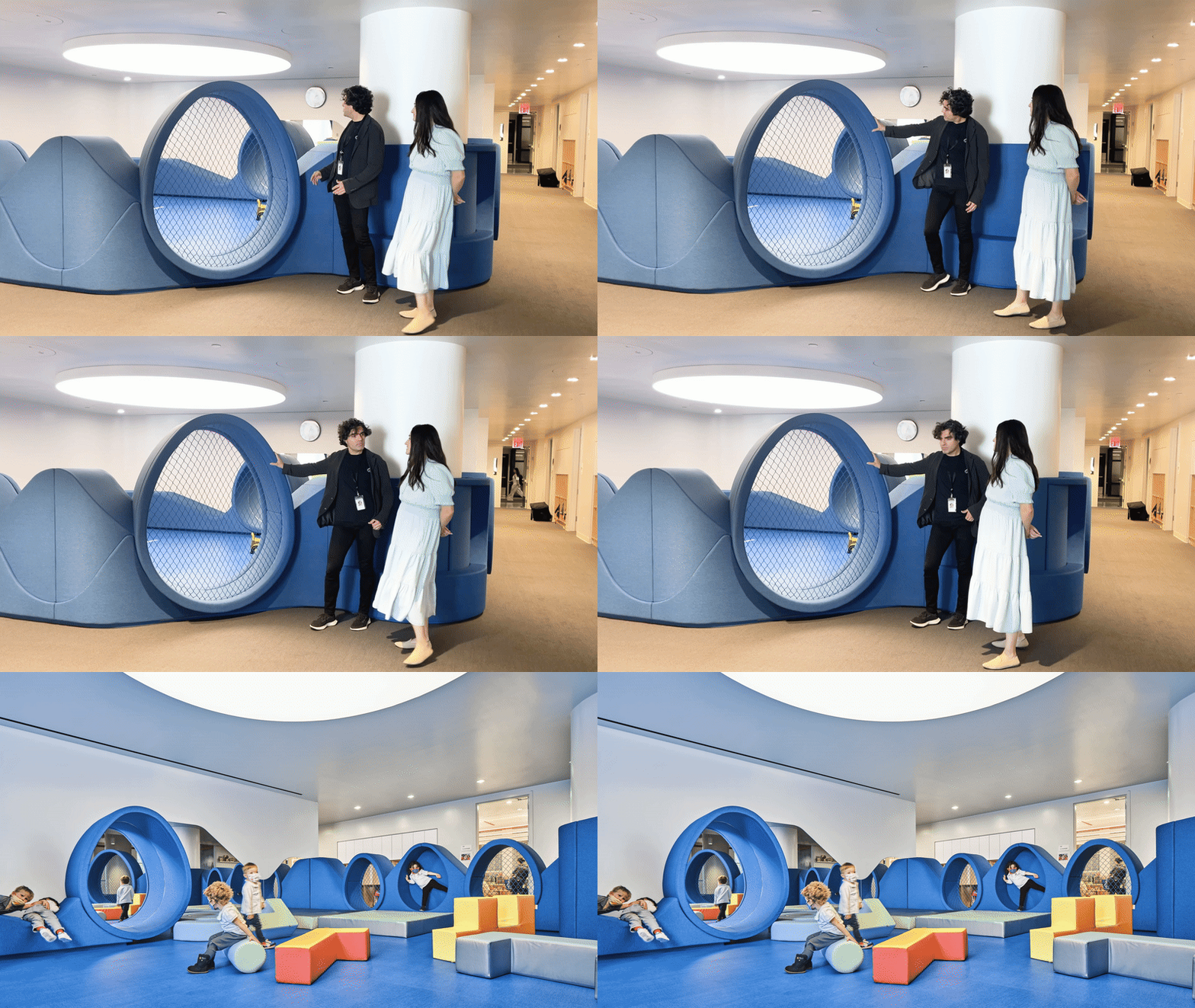
Design Meeting with Project Architect Aybars Asci at Small World, Avenues New York
CJ: Can you tell us about the process on how you decide on which parts of the campus to transform and when? How do you engage different stakeholders? How do you guide the design & construction teams?
AD: Our projects usually fall into one of two categories: projects that are required to support our growing campus and enrollment (ex: turning an office into a classroom.) and projects that repurpose space to be more on brand, better used (ex: turning end caps into offices, redoing the hallways). There are also projects that we do that are required from a regulatory standpoint. The design process is really collaborative between the campus team, the architect and the construction team. We usually do a series of meetings to align on the goals we want for the space, and then multiple design iterations to continuously gather feedback. We often pilot things (like the nook) in one place, and then see if it’s something we want to replicate.
Student Commons at Avenues New York
CJ: Can you tell us a little about your background? You began as a teacher and later moved into operations—what prompted that shift, and how has your classroom experience shaped the way you approach your current role?
AD: I started out as an office manager in a charter middle school. I loved school from a young age and knew I wanted to have a career in education, but I wasn’t sure at the time if that was teaching. After two years in an office manager role I moved into the classroom, where I loved teaching middle school math. After 5 years in that role I moved into administration, and eventually was the principal of two different charter middle schools. It was in that role that i realized that the part of the job I enjoyed the most was the operational side. I think if you don’t have the right conditions and the right environment in a school, you can’t have great teaching and learning. I wanted to focus on that often overlooked aspect of education, and I’ve been in an operations role ever since.
Ariella Diamond is the Director of Operations and Strategic Initiatives at Avenues New York, leading facilities, construction and campus operations. She has nearly two decades of experience in education, serving as a teacher, principal and operations leader. Ariella brings a unique perspective on how thoughtful operations can power world-class learning.